
Melting Point of Gold, Silver, Platinum and Other Precious Metals
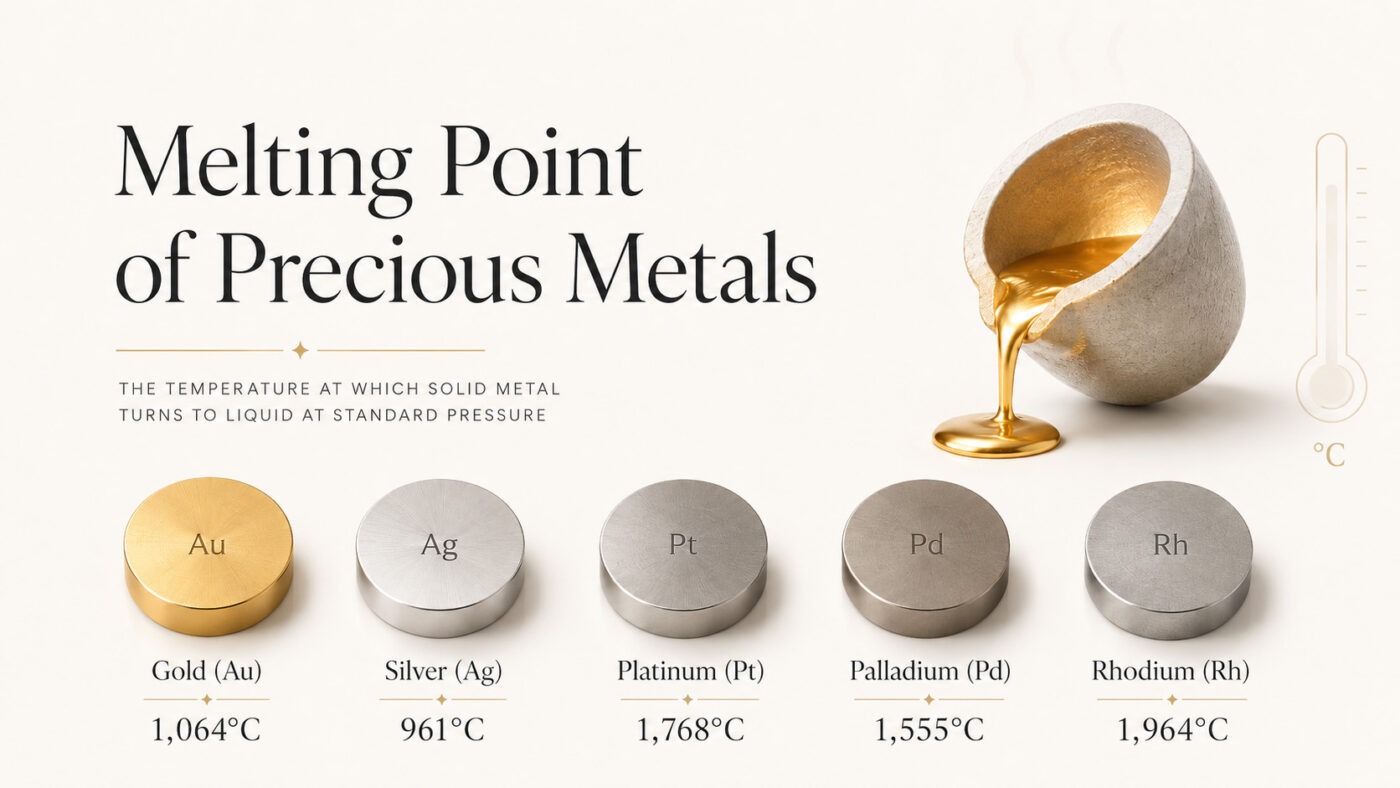
Precious metals melt at different temperatures depending on their purity and composition. Pure 24ct gold melts at 1,064°C, while silver melts at 961°C, platinum at 1,768°C, and palladium at 1,555°C. Lower carat jewellery such as 9ct or 14ct gold melts at lower temperatures because it contains a higher percentage of alloy metals.
When you sell your old jewellery, coins or scrap precious metals to Swift Gold, the metals are often melted and recycled, helping reduce the need for new mining and making precious metals recycling better for the environment.
Understanding the Melting Point of Precious Metals
The melting point of a metal is the temperature at which it changes from a solid into a liquid. Every precious metal has a different melting point because each metal has its own chemical structure and density.
This is especially important in jewellery manufacturing and precious metals recycling. When old jewellery or scrap gold is sold to refiners, the metals are melted down, purified and reused to create new jewellery, bullion bars and coins.
Melting Points of Popular Precious Metals
| Metal | Approximate Melting Point |
| Gold | 1,064°C |
| Silver | 961°C |
| Platinum | 1,768°C |
| Palladium | 1,555°C |
| Rhodium | 1,964°C |
Silver melts at a lower temperature than gold, while platinum and palladium require much higher heat because of their density and strength.
Why Different Gold Jewellery Melts at Different Temperatures
Gold jewellery is rarely made from pure gold unless it is 24ct gold. Most jewellery is mixed with other metals such as silver, copper, or palladium to improve durability, to change the colour or strength of the jewellery.
These additional metals are known as alloys. The more alloy metals added, the lower the purity of the gold and the lower the melting point becomes.
Melting Points of Different Gold Carats
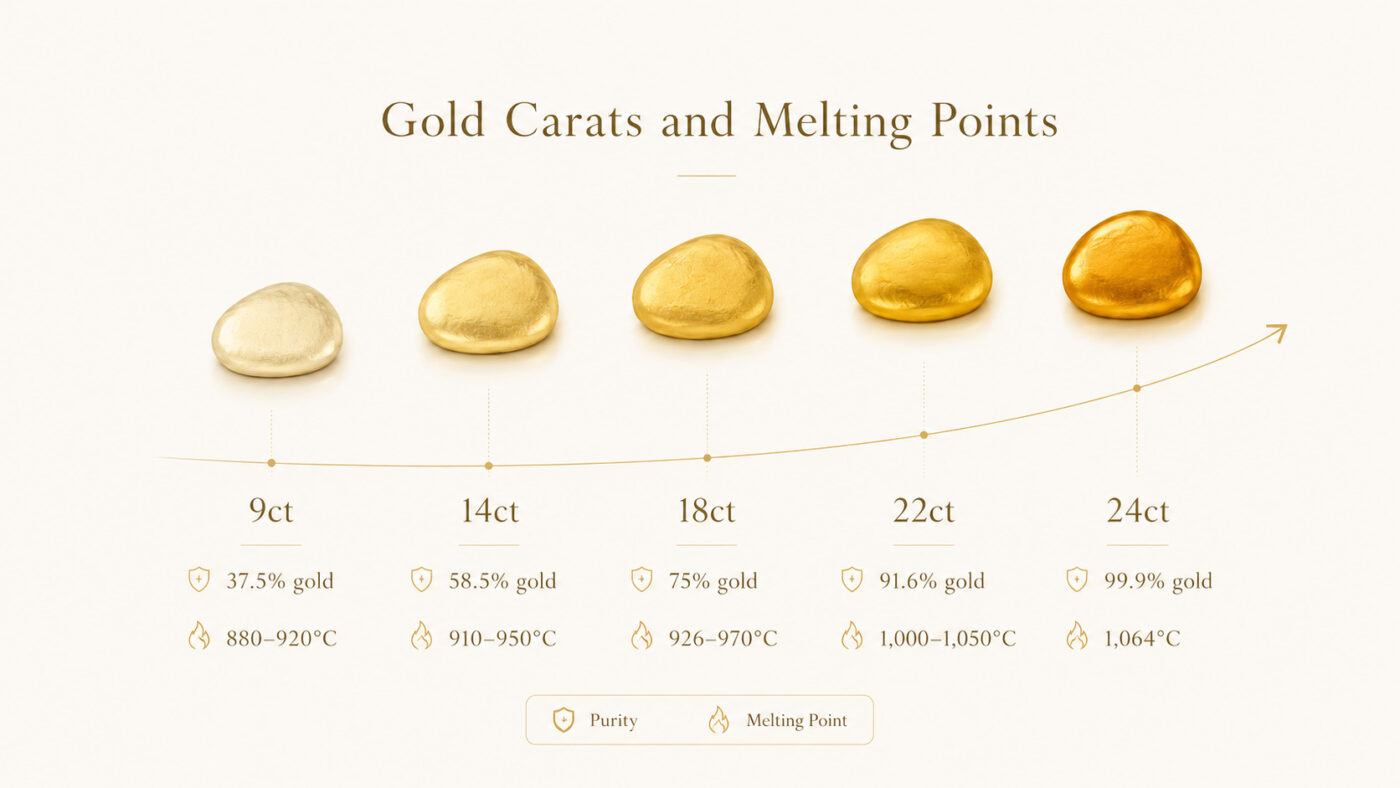
| Gold Purity | Gold Content | Approximate Melting Point |
| 9ct Gold | 37.5% Gold | 880°C – 920°C |
| 14ct Gold | 58.5% Gold | 910°C – 950°C |
| 18ct Gold | 75% Gold | 926°C – 970°C |
| 22ct Gold | 91.6% Gold | 1,000°C – 1,050°C |
| 24ct Gold | 99.9% Gold | 1,064°C |
This is why 9ct and 14ct jewellery melts at lower temperatures than 22ct or 24ct jewellery.
High purity jewellery such as 22ct Asian gold jewellery or 24ct investment gold contains far more pure gold, so its melting point is much closer to pure gold itself.
Precious Metals Recycling and the Environment
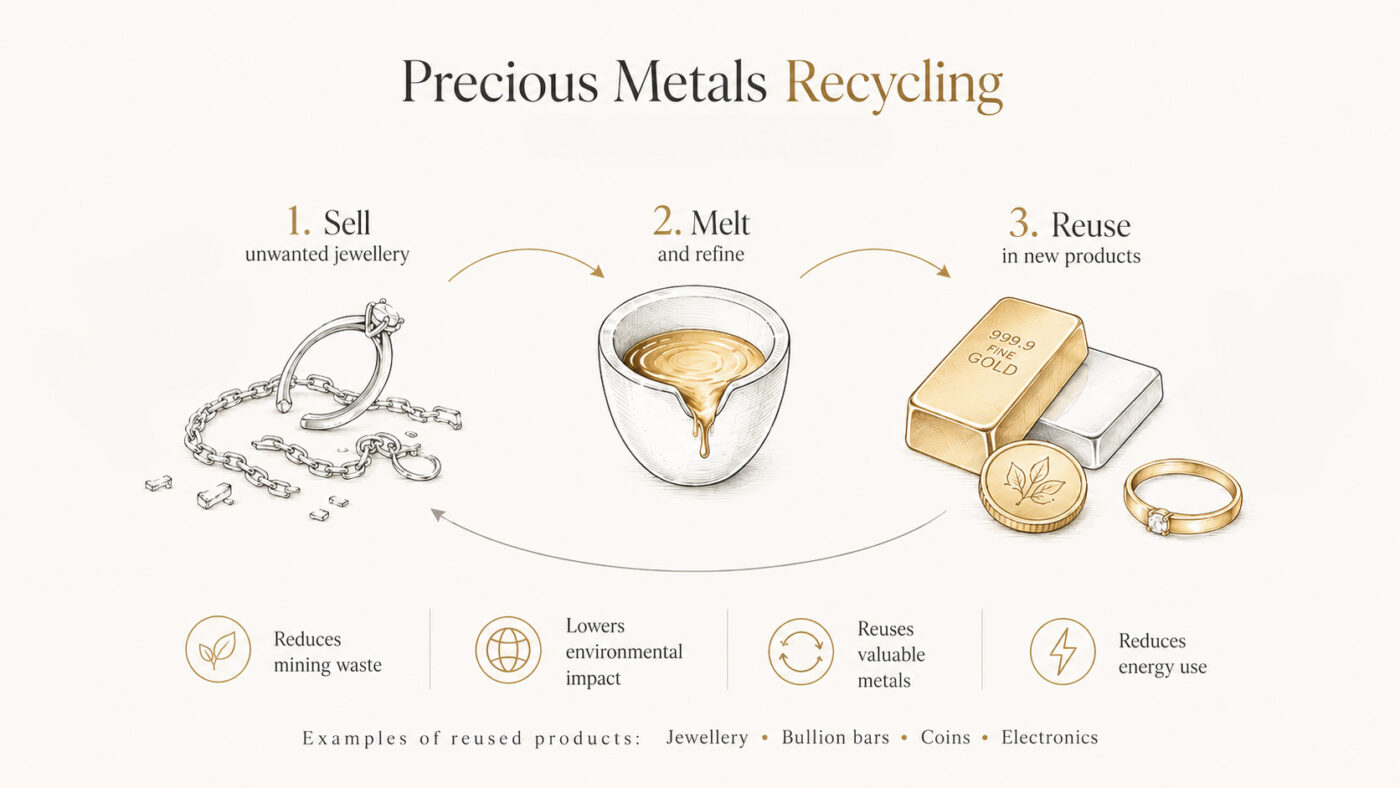
When customers sell unwanted jewellery or scrap gold to Swift Gold, the metals are rarely wasted. Instead, they are usually melted, refined and recycled into new products.
Recycled precious metals are commonly reused in:
• New gold and silver jewellery
• Investment bullion bars
• Gold and silver coins
• Electronics and industrial applications
This process is important because recycling precious metals helps reduce the environmental impact caused by mining. By selling your old jewellery to Swift Gold, you are helping precious metals remain in circulation instead of requiring newly mined materials.
Benefits of Precious Metals Recycling
• Reduces mining waste
• Lowers environmental impact
• Reuses valuable metals already in circulation
• Reduces energy consumption compared to mining
Gold and silver can be melted and reused repeatedly without losing their core properties, making them among the most recyclable materials in the world.
Sell Your Scrap Gold and Jewellery to Swift Gold
If you have old jewellery, broken chains, unwanted rings, scrap gold or silver jewellery, Swift Gold offers a simple and reliable way to turn your precious metals into cash.
We buy:
• 9ct, 14ct, 18ct, 22ct and 24ct gold jewellery
• Scrap gold and silver
• Gold and silver coins
• Platinum and palladium jewellery
• Broken or damaged jewellery
Even if you do not know the carat of your unwanted jewellery, we still buy it as we test and verify the purity using non-destructive methods like XRF.
At Swift Gold, we offer competitive prices based on live precious metals market rates, helping customers receive strong value for their jewellery.
Whether you are selling a single item or an entire collection, our process is designed to be clear, secure and straightforward.
Summary
Precious metals melt at different temperatures depending on their purity and composition. Pure gold melts at 1,064°C, while silver, platinum and palladium all have their own melting points. Lower carat jewellery melts at lower temperatures because it contains more alloy metals.
When you sell your unwanted jewellery or scrap precious metals to Swift Gold, the metals are melted and recycled into new products. This helps reduce environmental impact while allowing valuable precious metals to continue being reused for future generations.